ServicesTile Flooring
Tile Flooring in Tomball
Porcelain, ceramic or natural stone, laid in the rooms that take the most water and wear. Before we cut a single tile, you receive a written scope covering prep, setting materials and trim, so every part of the job is settled on paper first.
Choosing tile for your home
Tile earns its place where floors get wet, gritty or heavily walked. Porcelain is dense and absorbs very little moisture, which makes it a strong choice for bathrooms, laundry rooms and mudrooms. Glazed ceramic is lighter and easier to cut, and it works well in drier, lower-traffic rooms. Natural stone brings real variation in color and veining but needs sealing and a little more care. If you want a similar look that feels warmer underfoot, our luxury vinyl tile page is worth a read.
Tile is also the least forgiving floor to install. It is rigid, so it cracks if the slab under it moves or the surface is not flat. Many homes around Tomball sit on concrete slabs over clay soil that shrinks and swells with the seasons, which is why we spend real time on prep: checking flatness, filling low spots and adding a crack isolation membrane where the slab calls for it.
That prep is where surprise charges usually come from. We look for it during the visit and write it into your quote, line by line, before you commit.
What a tile installation includes
Removal and haul-away
We take up the existing carpet, vinyl, laminate or old tile and haul it away. Tearing out old tile is loud and dusty, so we seal doorways with plastic and cover vents in the work area.
Slab and subfloor prep
We check flatness with a long straightedge, grind high spots and use patch or self-leveler on low ones. Large-format tile needs a flatter surface than small tile, and we tell you if your size choice changes the prep.
Crack isolation membrane
Where we find hairline cracks in the slab, we set an uncoupling or crack isolation membrane so slab movement is less likely to show up in the tile above.
Layout and setting
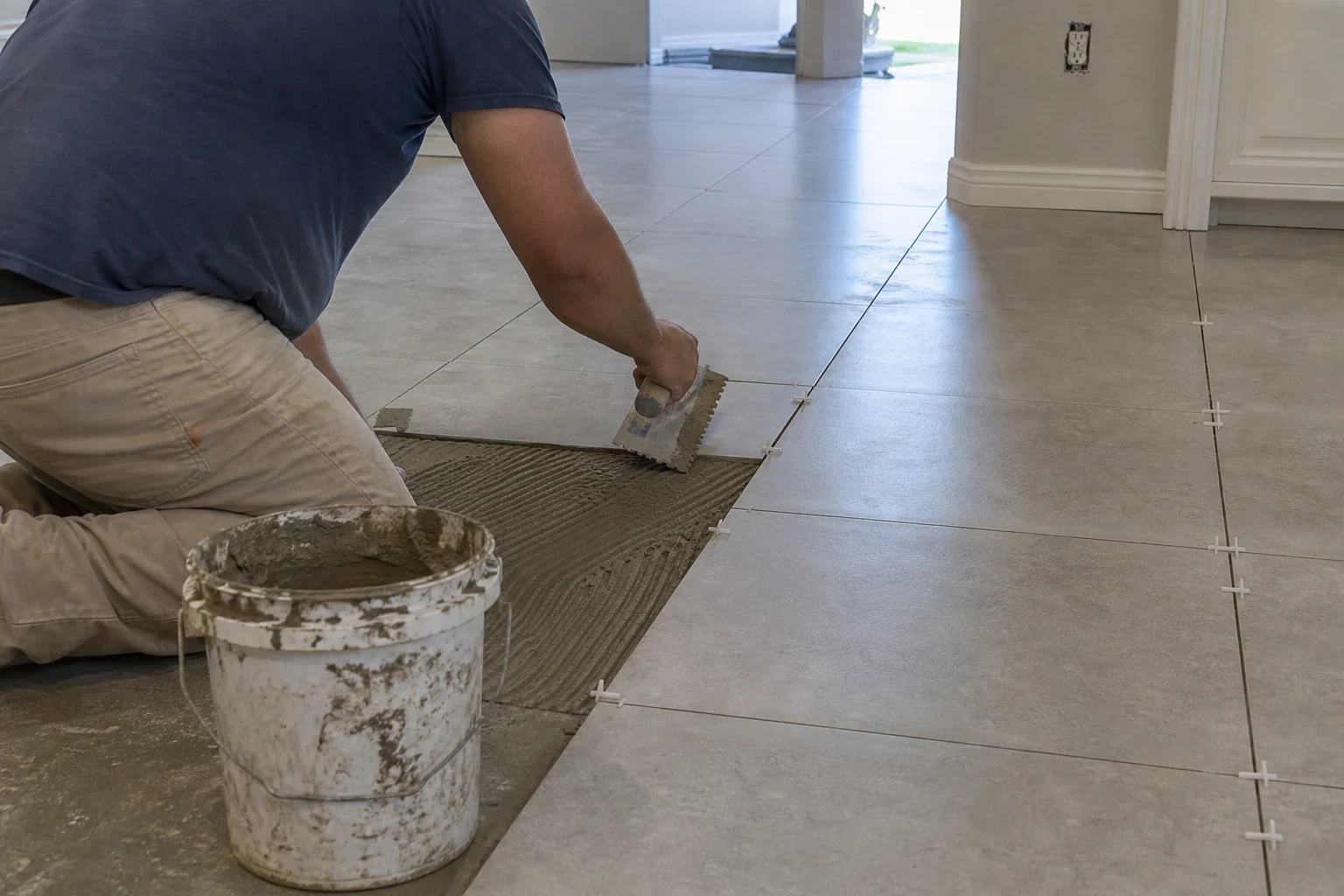
We dry-lay the pattern to balance cuts at walls and doorways, then set each tile in thinset with full coverage. Larger tiles are back-buttered, and leveling clips keep the edges even.
Grout, soft joints and trim
We grout in the color you chose and leave flexible joints at the perimeter and where tile meets cabinets or tubs, filled with matching caulk. Transitions to neighboring floors and new baseboard or quarter round appear on your written estimate.
Cleanup and care
We clear grout haze and debris, then walk you through cure times and sealing if your grout or stone needs it.
Signs it is time for new tile
- Hollow or cracked tiles
- A tile that clicks or sounds hollow when tapped has lost its grip on the floor below. Cracks running across several tiles in a line often follow a crack in the slab.
- Crumbling or stained grout
- Grout that is breaking out, or stays dark after cleaning, lets water reach the setting bed. It shows up first around showers, tubs and toilets.
- Edges you can feel
- Lippage, where one tile edge sits higher than its neighbor, catches toes and chair legs. It usually points to thin coverage or an uneven base.
- A wet room with the wrong floor
- Carpet or laminate in a bath, laundry room or entry tends to swell, stain or hold odors. Porcelain handles standing water and wet shoes far better.
- A busy, dated look
- Small square tile with wide grout lines can make a room feel cluttered. A larger format with narrow joints gives a calmer finish and fewer lines to scrub.
How a tile job runs
- 1
Measure and slab check
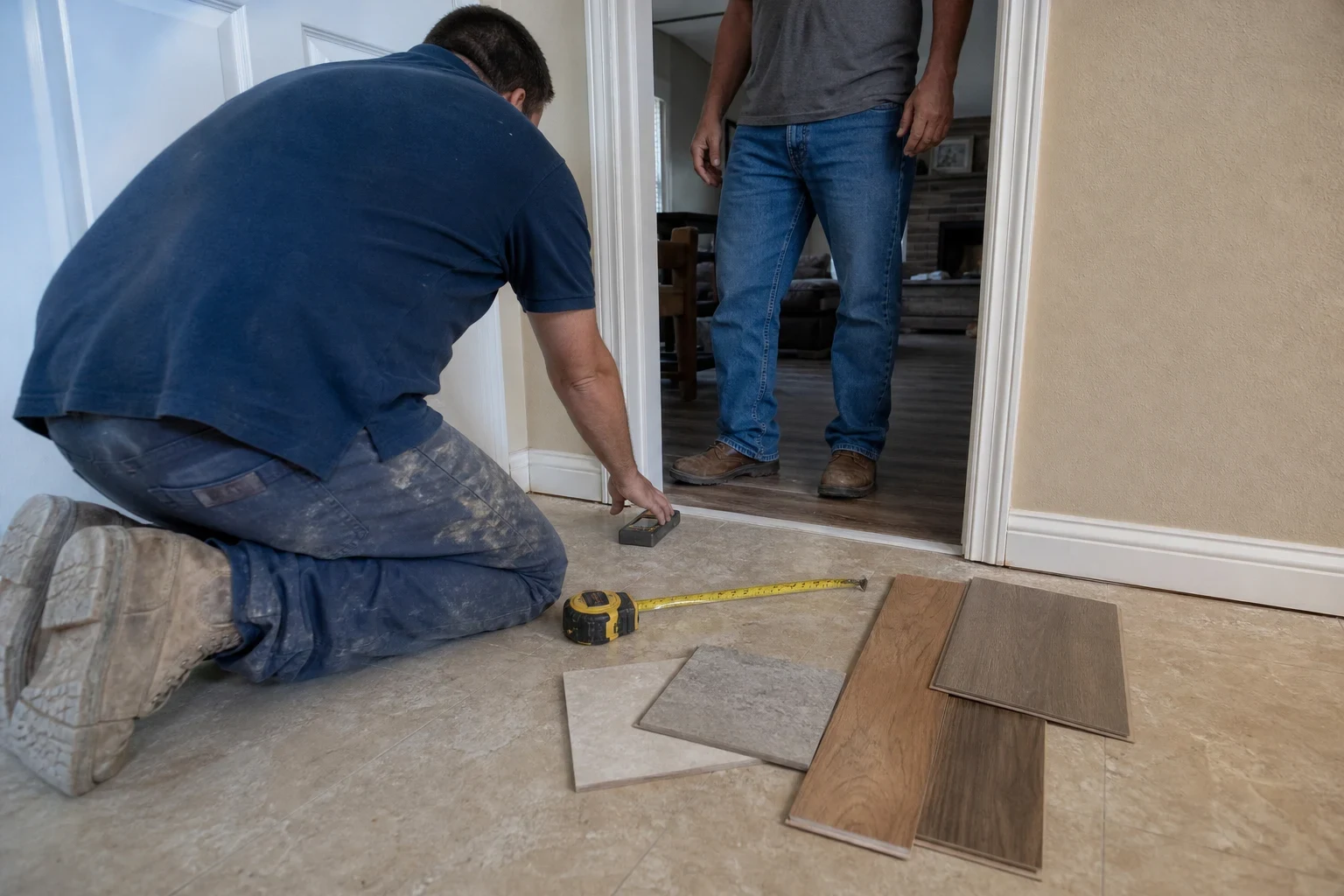
We measure each room, look closely at the slab or subfloor, note door heights and transitions, and talk through tile size, pattern and grout color with you.
- 2
Your written estimate
Removal, prep, membrane, setting materials, trim and cleanup each get their own line. If something cannot be known until the old floor is up, we say so in writing and explain how it would be handled.
- 3
Tear-out and prep
We protect the surrounding rooms, remove the old floor and prepare the surface. Plan on the room being out of use, and let us know during the visit what furniture needs moving so it is accounted for.
- 4
Setting and grouting
Tile goes down first, and grout follows once the thinset has firmed up, typically the next day. Light foot traffic comes back before furniture and heavy use do, and we give you the timing for your materials.
- 5
Final walk-through
We walk the finished floor with you, check edges and joints, and leave written care notes for your tile and grout.
What moves the price of a tile floor
With tile, much of the cost sits in what happens before the first piece goes down. Every factor below appears on your written quote as its own line. That way you can see where the money goes and adjust choices if you want to.
- Tile size and material
- Large-format porcelain needs flatter prep and often two people to set. Natural stone is slower to cut and needs sealing. Mosaics take longer per square foot.
- Pattern
- A straight lay is the most efficient. Herringbone, diagonal and offset patterns add cuts and extra tile for waste.
- Slab condition
- Cracks, high spots and leftover adhesive add grinding, leveling or membrane work. We find most of this during the visit.
- What comes up first
- Removing glued-down tile or thick mastic takes far longer than pulling up carpet and pad.
- Room details
- A bathroom with a toilet to reset, or a kitchen with long cabinet runs and several doorways, needs more cutting and trim than one open room.
Tile flooring questions
- Can you put new tile over my existing tile?
- Sometimes. If the old tile is flat and still firmly attached, tiling over it can work, but it raises the floor height, which affects doors, appliances and transitions. In most cases we recommend removal so we can see and prepare the slab. We tell you which applies to your floor during the visit.
- Should I choose porcelain or ceramic?
- Porcelain is denser and resists water and chipping better, which suits baths, entries and kitchens. Ceramic is easier to cut and works well in drier rooms with lighter traffic. Both look good when the prep is right, and we can talk through the specific tiles you are considering.
- How long will my room be out of use?
- A single room usually takes a few days from tear-out to grout, longer if the slab needs leveling or a membrane. Your quote lays out the expected sequence so you can plan around it.
- Why did my old tile crack?
- Most cracked floors come from movement or poor coverage beneath the tile. Slabs on clay soil shift slightly over time, and thin or spotty thinset leaves tiles unsupported. We read the pattern of the cracks to decide what prep your new floor needs.
- Will there be extra charges once you start?
- Your quote lists everything we can see and measure. The one thing nobody can fully see is the slab under glued-down flooring. If we find something there, we stop, show you, and put any change in writing before doing added work.
Get your tile quote in writing
Tell us about the room and the tile you have in mind. We will arrange a visit, measure and check the slab, and put the full scope on paper before any work is scheduled.